Imagine two property management companies. Both manage luxury condominiums in Miami. Both have stellar portfolios, responsive teams, and glowing reviews. But one has a polished, minimal logo with clean serif typography and a muted gold accent. The other has a pixelated icon that looks like it was built in an afternoon on a free tool.
Which one gets the call from the high-net-worth investor?
You already know the answer.
In the luxury real estate market, perception isn’t just part of the business but real business. And your logo is often the very first thing a prospective client sees before they ever read a word about your services. For property management companies targeting affluent clients, premium rental portfolios, and high-value asset owners, your logo is doing a lot of heavy lifting before you even pick up the phone.
This guide breaks down exactly what makes a luxury property management logo work, and how you can use smart design choices to position your firm as the obvious choice in a competitive market.
Key Takeaways
- A luxury logo communicates credibility before you say a word
- Color, typography, and simplicity are the three pillars of high-end real estate branding
- A logo is most powerful when it’s part of a complete visual identity system
- DIY design signals DIY clients, investing in professional branding pays back significantly
What Makes a Good Property Management Logo for the Luxury Market?
A luxury logo isn’t just a pretty mark. It’s a trust signal. It tells a prospective client, often someone managing significant wealth or making decisions about a high-value property portfolio, that you operate at their level.
Here’s what separates a forgettable logo from one that commands attention:
Instant recognizability. The best logos don’t need explanation. Think about how brands like CBRE or JLL maintain visual identities that communicate stability and sophistication without a single word of explanation. Their marks are clean, confident, and consistent across every touchpoint. That instant “read,” knowing what a brand stands for before you’ve processed the text, is what every luxury property management firm should be aiming for.
Clarity without complexity. A logo that requires a second look isn’t doing its job. Design legend Paul Rand, known for shaping corporate identity systems across the 20th century, believed that good design was about eliminating the unnecessary. That principle holds perfectly in luxury real estate branding. If your logo makes someone tilt their head, simplify it.
A coherent system behind it. Your logo doesn’t work in isolation. It’s the anchor of a complete visual identity, brand colors, typography, stationery, digital assets, and signage. Firms like Cushman & Wakefield and JLL don’t just have good logos; they have complete visual systems that are consistent whether you’re viewing a business card or a 40-page investor report.
The Design Elements That Actually Signal “Luxury”
Color Psychology for High-End Property Management Logos
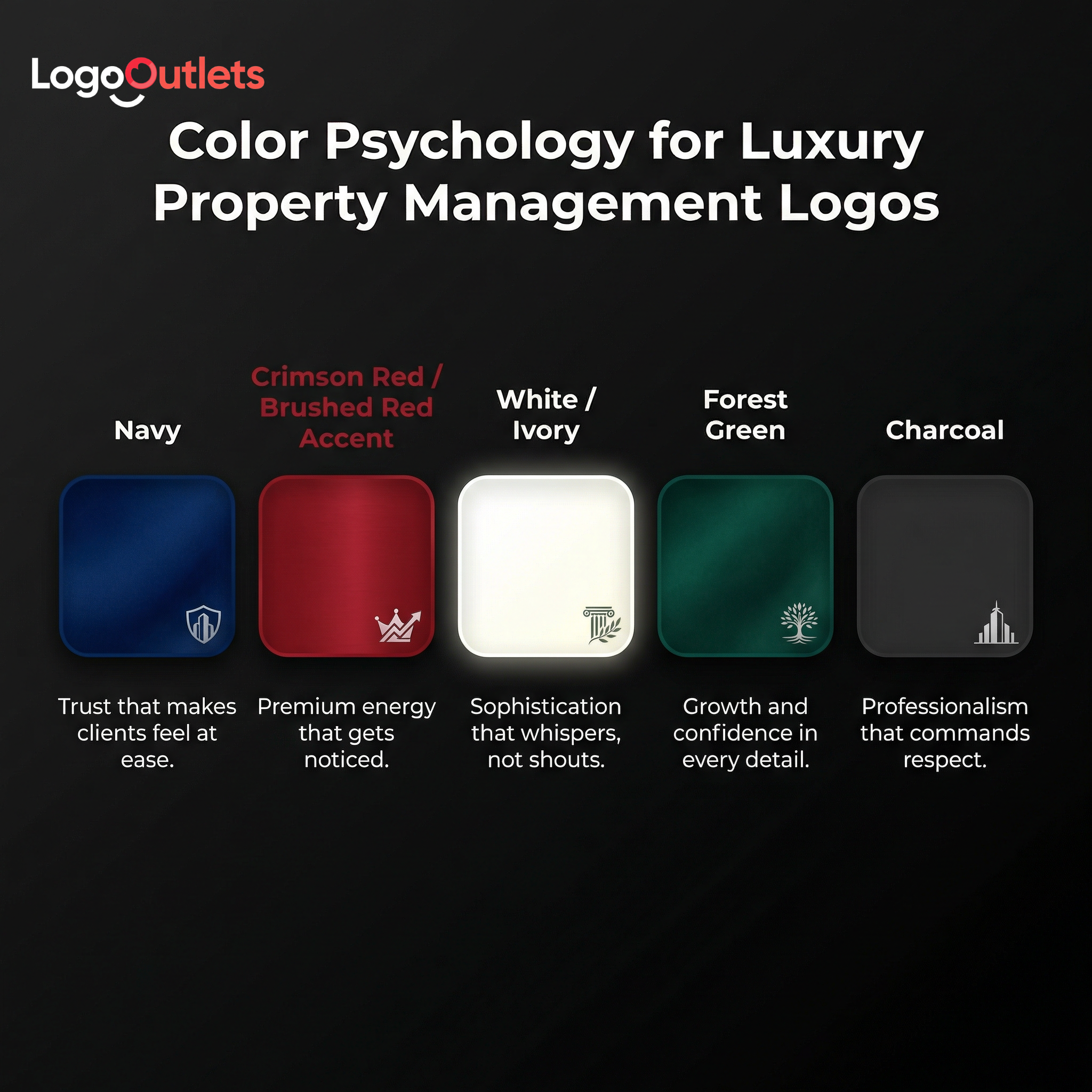
Color is one of the most powerful and underestimated elements in luxury real estate branding. The wrong palette can unintentionally communicate discount or disorder. The right one communicates exclusivity and trust on a subconscious level.
Here’s how the most effective colors function in premium property management logos:
- Navy and deep charcoal signal authority, reliability, and professionalism, qualities a client trusts with a multi-million dollar property
- Brushed gold or champagne communicates premium quality without feeling flashy when used as an accent
- Warm ivory and soft stone serve as sophisticated backgrounds that feel elevated without coldness
- Muted forest green is increasingly popular in luxury real estate for its associations with growth, nature, and quiet confidence
What to avoid: bright primary colors, gradients that feel digital, and color combinations that read as energetic or casual. Luxury doesn’t shout.
Typography: The Silent Communicator
Your font choices reveal more than you might expect. In a luxury property management logo design, typography hierarchy communicates brand personality instantly.
Serif fonts (think quiet elegance, the kind used by legacy financial institutions and established real estate firms) signal heritage, trust, and timelessness. Designers like Massimo Vignelli championed the idea that typography, chosen correctly, communicates without needing to say anything at all.
Sans-serif fonts, when used in their clean, geometric forms, communicate modern authority. Think architectural clarity, precise, deliberate, uncluttered.
Script or custom letterforms, when used sparingly, can add a sense of bespoke identity. But proceed carefully: a badly chosen script reads as amateur instantly.
The general rule for luxury property management logos: pair one strong serif or geometric sans-serif with maximum restraint. Avoid more than two typefaces in any logo system.
The Visual Identity Framework Every Property Management Brand Needs
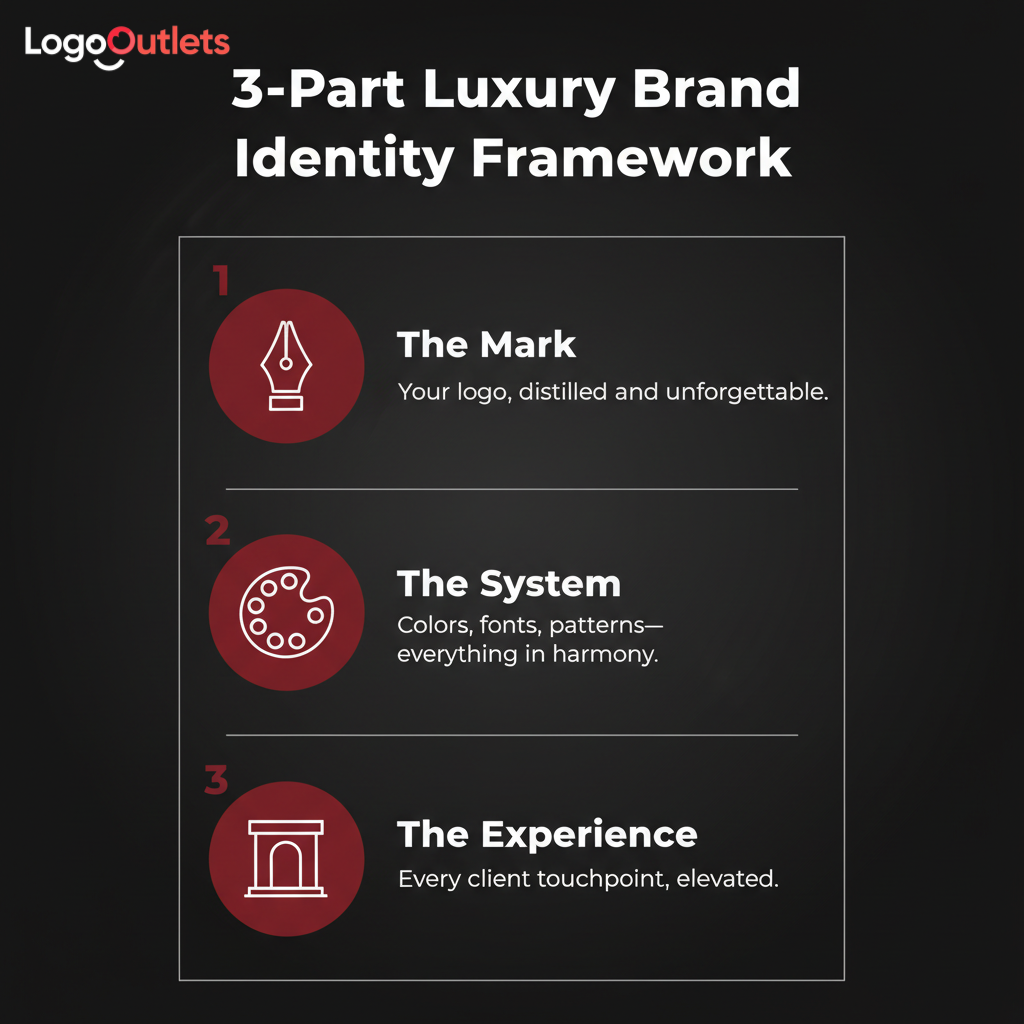
Here’s a simple three-part framework to think about your branding system as a whole, not just your logo:
- The Mark — Your primary logo. This is the most distilled expression of your brand. It needs to work in black and white, at small sizes, and on every surface.
- The System — The supporting elements: brand colors, secondary typefaces, graphic patterns, iconography, and spacing rules. Every piece of collateral, from your email signature to your property listing brochures, should feel unmistakably like you.
- The Experience — How the visual identity extends into real-world touchpoints: your website, your signage at properties, your welcome packages for new tenants, your investor decks. Firms recognized by the Institute of Real Estate Management and certified managers holding the CPM (Certified Property Manager) designation already carry professional credibility. Still, your visual identity should reinforce that at every interaction.
“Design is the silent ambassador of your brand.” — Paul Rand
Property Management Logo Best Practices: Quick Reference
| Design Element | Luxury Best Practice | Common Mistakes to Avoid |
| Color palette | 2–3 muted, refined tones with one accent | Too many colors; overly bright or neon tones |
| Typography | One strong serif or geometric sans-serif | Mixing 3+ fonts; decorative or novelty typefaces |
| Icon/Symbol | Simple, scalable, meaningful mark | Overcomplicated crests or clip-art style icons |
| Spacing | Generous whitespace; balanced proportions | Crowded layouts; text too close to icon |
| Versatility | Works in full color, black, white, and reversed | Only looks good in one color or at a large size |
| Brand system | Consistent across all touchpoints | Logo used inconsistently across platforms |
What Most Property Management Companies Get Wrong About Logo Design
This is worth being direct about: a logo is not a one-afternoon project, and it’s not a DIY task when you’re positioning yourself in the luxury market.
Here’s a real pattern that plays out constantly in premium real estate. A property management firm spends years building an impressive portfolio, prime locations, high-net-worth tenants, and institutional relationships. Then a potential investor or client lands on their website and sees a logo that looks like it was assembled from a free template. The mismatch between the quality of the services and the quality of the visual identity creates immediate doubt. If they don’t invest in their own brand, will they invest in mine?
The Institute of Real Estate Management and organizations like the Building Owners and Managers Association set high professional standards for property management practice. Your visual identity should reflect that same level of commitment.
Do this, not that:
- Do invest in a professional designer or a quality platform like 99designs, or engage a branding agency with real estate experience
- Don’t rely on general DIY tools for your primary logo if you’re competing in the luxury segment
- Do use your logo consistently across every platform and asset
- Don’t use different versions, colors, or proportions depending on where it appears
- Do think about how your logo looks at small sizes, on a mobile screen, on a business card, as a favicon
- Don’t design only for large-scale hero use without testing versatility
A Familiar Scenario in Luxury Real Estate Branding
Consider a boutique property management firm entering the high-end residential market in a major U.S. city. They manage twelve premium properties, hold a strong relationship with a small group of affluent landlords, and have one Accredited Residential Manager (ARM) on staff.
For the first two years, they use a placeholder logo, a basic wordmark in a standard font. Growth is slow. They get referrals, but closing rates on new inquiries are inconsistent.
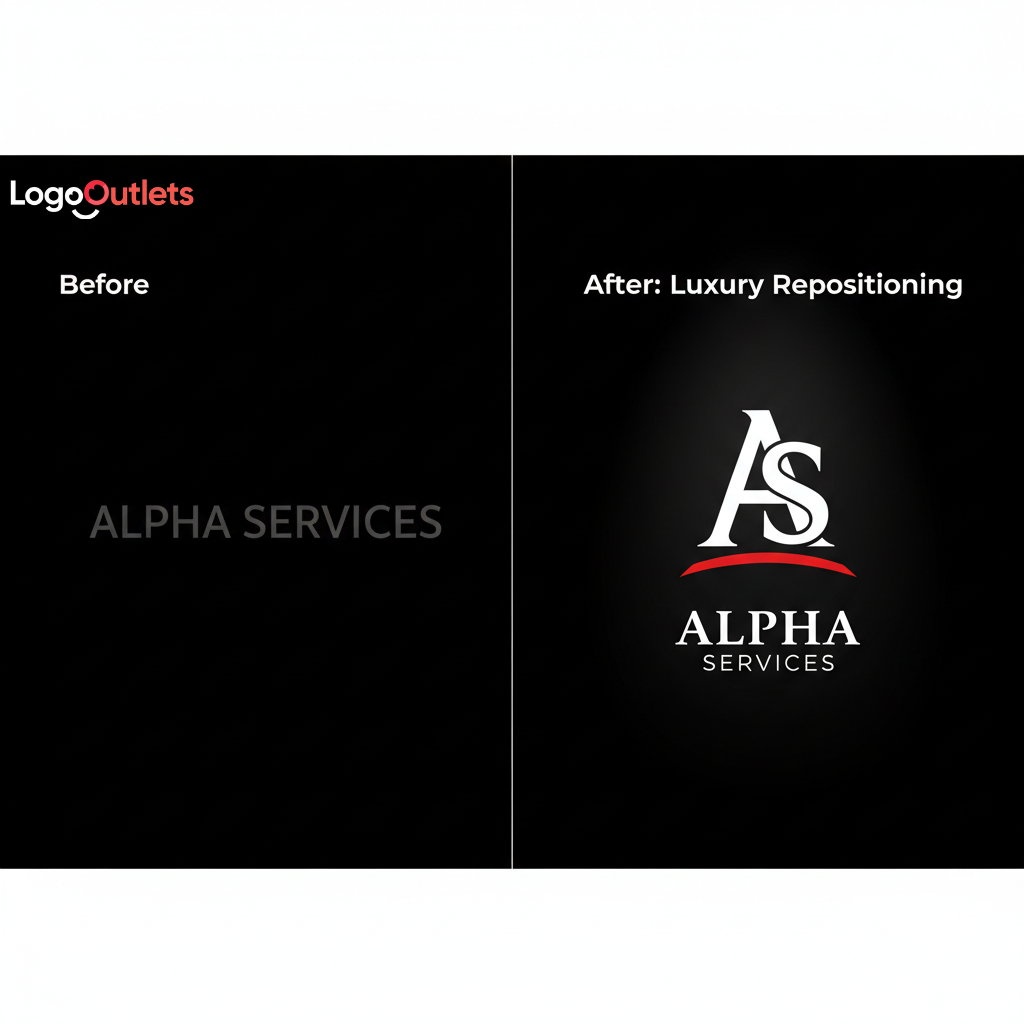
Then they engage a branding designer to develop a complete visual identity: a refined monogram mark, a two-tone palette of deep navy and warm ivory, a consistent typographic system, and updated stationery. Within months, their website bounce rate drops, inquiry quality improves, and two new investor clients specifically mention that the firm “looks the part.”
Nothing about their services changed. Their logo and the visual identity system behind it did all the repositioning.
According to the National Association of Realtors, brand consistency is one of the key differentiators for real estate professionals seeking to move upmarket. A unified visual identity reinforces the trust signals that affluent clients prioritize.
How to Build Your Luxury Property Management Logo: A Practical Checklist
Before you brief a designer or evaluate a design you’ve received, run through this:
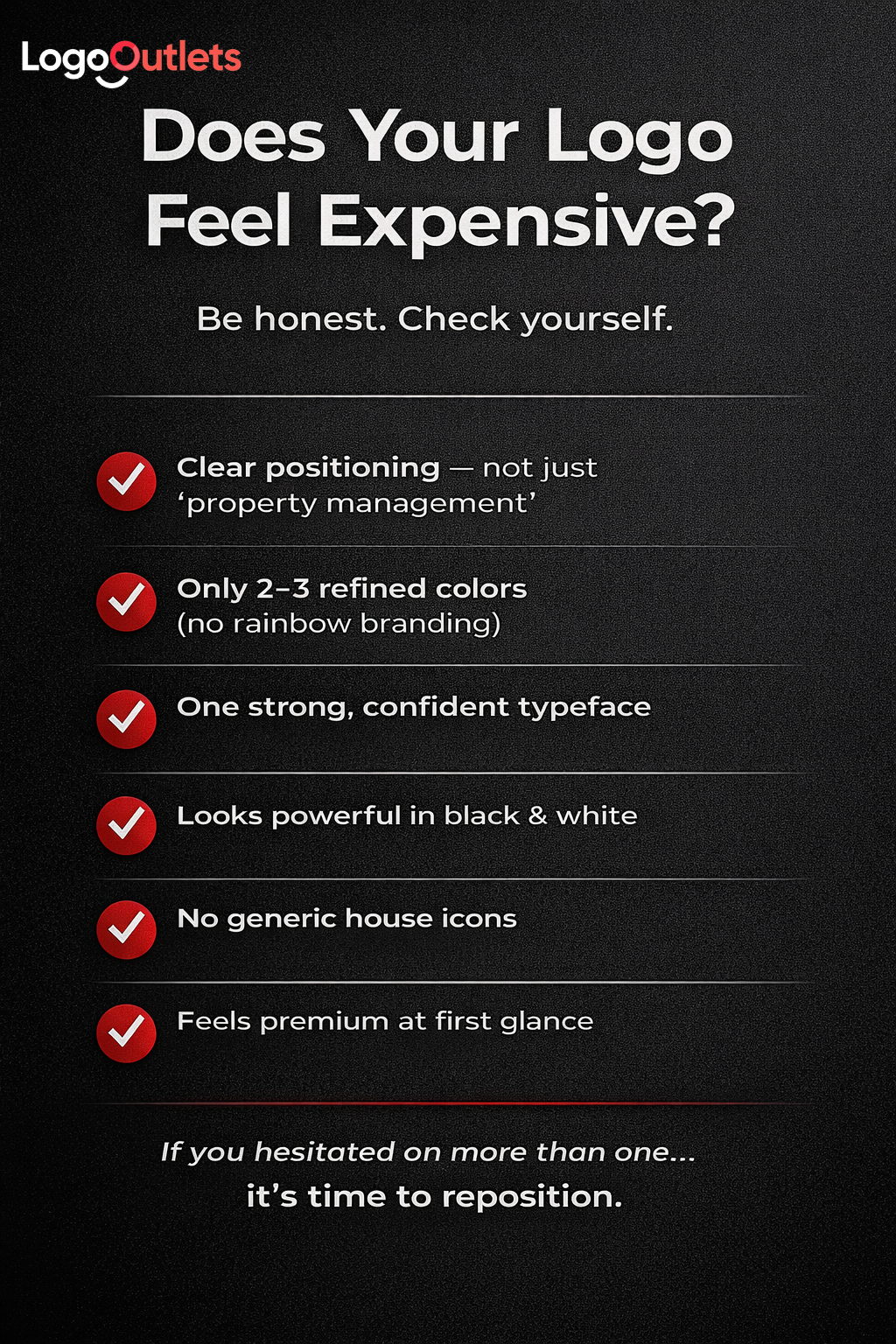
- Define your positioning first. Are you targeting ultra-high-net-worth investors? Boutique luxury rentals? HOA governance for premium communities? Your logo should reflect your specific niche.
- Choose a color palette of 2–3 refined tones. Start with neutrals and add one deliberate accent.
- Select one primary typeface. Serif for heritage and trust; geometric sans-serif for modern authority.
- Design for versatility. Test your logo in black and white, at 32px, on dark and light backgrounds.
- Avoid literal iconography. A house icon is overused and generic. Consider an abstract mark, a monogram, or a simple geometric form with intentional meaning.
- Build the system. Don’t finalize your logo without a plan for how it will work across your website, stationery, signage, and digital platforms.
The Conclusion: Your Logo Is a Business Decision, Not a Design Exercise
In the luxury property management space, your brand identity is a strategic asset. It’s what tells a prospective client, before the first conversation, before they’ve read a single testimonial, that you belong in their world.
The best property management logo ideas aren’t about being the most creative. They’re about being unmistakably credible, immediately clear, and consistently elevated across every touchpoint.
Whether you’re a startup property manager entering the luxury real estate market or an established firm ready to reposition upmarket, your logo is where that shift begins. Approach it with the same rigor you’d apply to any other significant business investment, because for the clients you’re trying to attract, it matters more than you might think.
Start with a clear visual identity. Build a complete brand system. And invest in it the way you want your clients to invest in you.
Frequently Asked Questions
Q1: What makes a good luxury property management logo?
A good luxury property management logo is immediately recognizable, simple enough to read at a glance, and designed to work across every format, from a mobile screen to a building sign. It uses a refined color palette, a single strong typeface, and is supported by a complete visual brand system that tells a consistent story.
Q2: What are the best colors for a property management logo?
Navy, deep charcoal, warm ivory, brushed gold, and muted forest green are among the strongest performers in luxury property management branding. These tones communicate authority, trust, and premium quality without feeling loud or casual.
Q3: What are the current trends in luxury real estate logo design?
Minimalism continues to lead, with clean geometric marks, refined monograms, and restrained color palettes. There’s also a growing preference for timeless serif typography over trend-driven fonts, and an emphasis on logos that perform equally well in digital and print environments.
Q4: How do I find a professional designer for my property management logo?
Platforms like 99designs, Looka, and Fiverr offer access to professional designers at various price points. For firms seeking a fully custom brand identity, engaging a branding agency with real estate or B2B experience will yield the most strategic result.
Q5: When should a property management company invest in rebranding?
If your current logo doesn’t reflect the quality of properties you manage, feels inconsistent across platforms, or was designed as a temporary placeholder, it’s time to rebrand. Repositioning toward the luxury market is also a strong trigger for a full visual identity refresh.
Q6: How much does a professional property management logo typically cost?
Costs range widely. Freelance platforms like Fiverr can offer logo design starting around $100–$500 for simpler projects. A full brand identity from a professional branding agency, including logo, color system, and typography, typically runs from $2,000 to $15,000 or more, depending on scope and market positioning.
Q7: Can a property management startup compete visually with established firms like CBRE or JLL?
Yes, and a well-executed visual identity is one of the fastest ways to close the perceived gap. Startups that invest early in professional, luxury-aligned branding position themselves credibly from day one, which directly affects the quality of clients and portfolios they attract.
Q8: What does your logo design process look like for property management clients?
Our process begins with a brand positioning session to understand your target clients, market niche, and long-term goals. From there, we develop a complete visual identity, logo, color palette, typography, and brand guidelines, so your firm looks the part at every touchpoint from day one.
